“For where two or three are gathered in my name, there I am in the midst of them.” (Matthew 18:20)

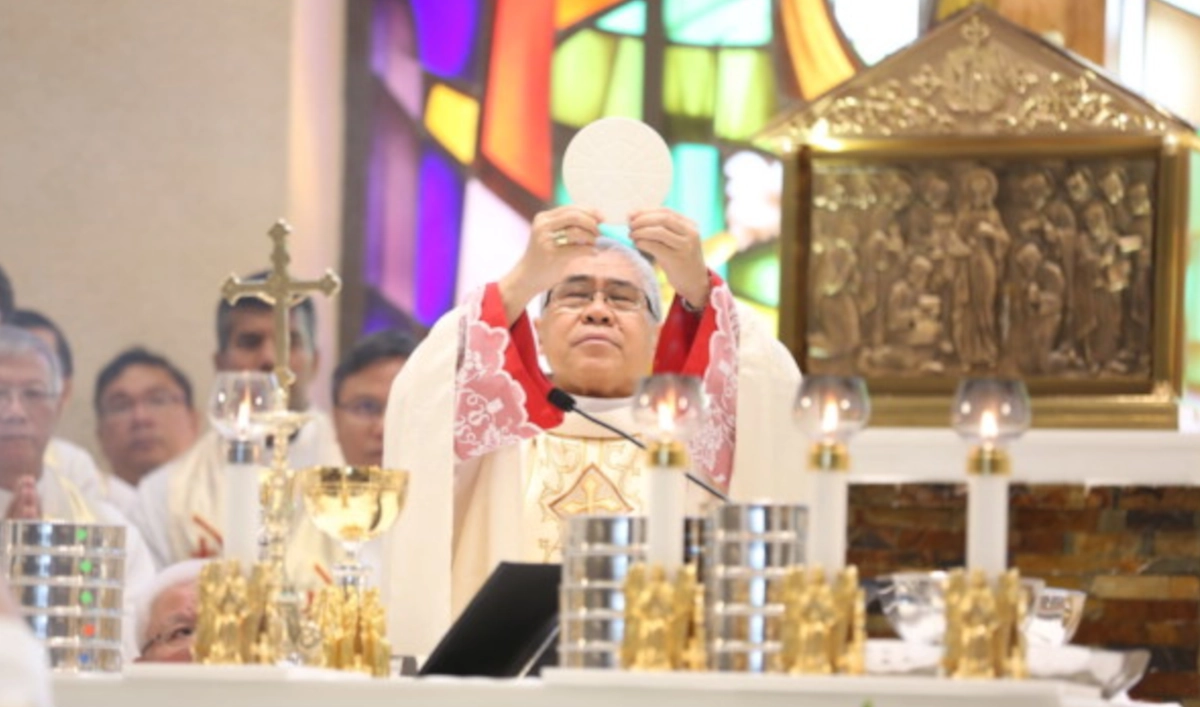
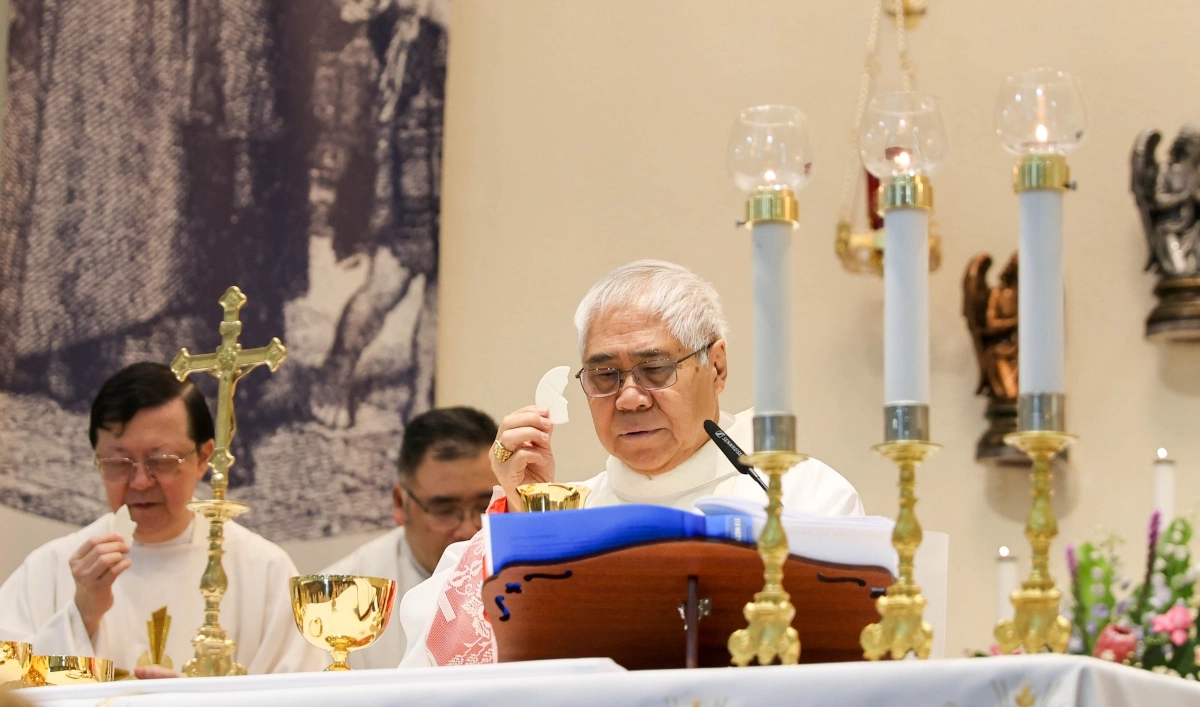
The Eucharist — a hallmark of the Christian faith. For anyone who believes in and accepts Christ, the Sacrament of the Eucharist does not merely symbolize, but takes the substance of the body and blood of Christ.
Yet, some Catholics who are homebound and/or cannot come to church are unable to receive this Sacrament at mass. For such individuals, Home Communion is an option to allow them to receive the Eucharist in their homes, brought to them by ministers from our parish, as a bond and sign of care.
As with Holy Communion, the Eucharist should be taken in sanctity and with the remembrance of Jesus’ sacrifice. It should only be adopted when the situation calls for it; those who are able to are strongly encouraged to partake of it at the church as a community.
Home Communion will be carried out by a Homebound Communion Minister and will bear resemblance to that of a Mass, however, it should not take more than 15 minutes. You may arrange for this sacrament at the parish office or via email at secretariat@svdp.sg.
Holy Communion is for practicing baptised Catholics who are in a state of grace, who believe in the Real Presence of Jesus Christ in the Eucharist, and of the age where they can go to confession is able to receive the Sacrament of the Eucharist.
No, the Eucharist is the Real Presence of God, Jesus Christ, - actual body, blood, soul, and divinity of Christ - under the appearances of bread and wine. Although the appearances remain the same, the substance of the bread and wine changes in the Eucharist. This phenomenon, known as transubstantiation, highlights the miraculous nature of the sacrament. Despite no visible change, we believe — because of Christ’s own words (John 6:47–58) — that the Eucharist is the real and substantial presence of Jesus.
You receive either on the tongue or in the hand. The priest holds up the Host and says, “The Body of Christ,” and the communicant answers, “Amen.” (meaning, “So be it.” “I agree.” “I believe.”)
Communion should not be received on the run, as you’re walking back to your place; it should be consumed before you leave the area below the altar.
If you are going to receive on the tongue, the head should be held erect, but slightly tilted back. The tongue should come out over the bottom teeth, equal with the bottom lip, so that the priest has someplace to put the Host. Wait till the priest has withdrawn his hand - do not bite the priest.
If you’re going to receive in the hand, put one hand down and put the other hand on top of it and make, as Tertullian used to say, a kind of throne for the Lord. When the priest puts the Host on your hand, you say, “Amen.” Take a step or two to the side to make way for the next communicant, then receive our Lord.
If you’re going to kneel for Communion — and it’s all right to kneel — remember that, when you rise, you have people behind you.
Communion with the Body and Blood of Christ increases the communicant's union with the Lord, forgives his venial sins, and preserves him from grave sins. Since receiving this sacrament strengthens the bonds of charity between the communicant and Christ, it also reinforces the unity of the Church as the Mystical Body of Christ. (Catechism of the Catholic Church, 1416)
So Jesus said to them, “Truly, truly, I say to you, unless you eat the flesh of the Son of man and drink his blood, you have no life in you; he who eats my flesh and drinks my blood has eternal life, and I will raise him up at the last day. For my flesh is food indeed, and my blood is drink indeed. He who eats my flesh and drinks my blood abides in me, and I in him. As the living Father sent me, and I live because of the Father, so he who eats me will live because of me. (John 6:53-57)